
Addiction is a condition manifested by a strong attraction for drugs and addictive substances even when the use of the drugs can have serious negative consequences.
Addiction not only affects the person’s physical and mental health, but it influences all walks of their family and social life.
Since each individual responds differently to addiction treatment and therapy, there is merit in using a combination of options that have a proven track record of success. This not only gives the patient a better chance to recover from the current symptoms but also to maintain long term drug-free lifestyle.
Another problem faced by professionals in treating addiction is the high rate of relapse. That is why there is a constant search to identify new methods to inspire patients to remain in the rehab centers long enough for permanent changes in the response of their body and brain to the substance being abused.
In this context, Equine-Assisted Therapy also known as Horse-Assisted Therapy is showing promise. This therapy option has a long history of use in the mental health field but recently it emerged as an innovative choice for addiction treatment regimen.
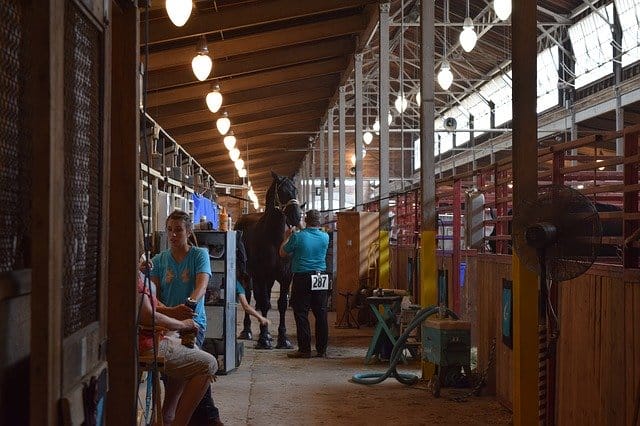
Along with other complementary treatment options, Equine-Assisted Therapy evolved into a successful tool and is being tried by a number of rehab facilities around the world. In particular, this approach appears to work by motivating patients to remain actively engaged in their treatment and motivated to complete the full course.
Researchers found that associative learning is one of the modalities by which horses learn to respond to a stimulus from those in their surroundings. This principle is applied in the equine therapy process.
For example, the horse can be introduced in different ways to the patient using the animal as a metaphor or symbol for comparison:
- To explain the horse’s behaviour (what is the horse running away from?)
- To discuss props or tools (what does the bridle or rein mean to the horse, and what is your bridle or rein in life?)
- To help the patient relate to life lessons learned (co-operation, what does it mean that you all dismounted to get the horse over the obstacle?) and
- To infer lessons about coping (when we work through our obstacles, we succeed).
With over 50% failure among patients to complete the traditional methods of addiction treatment, the equine assisted therapy appears to increase treatment retention time through factors such as empathy and alliance building.
Social interaction with the horse appears to give the patient meaning to human interactions leading to a possibility for behavioural change. Such change is useful in restoring trust and attachment in building relationships.
For Additional information and research publications check out: https://www.ncbi.nlm.nih.gov/pmc/articles/PMC4672500/