The Benefits of Horse Riding for Mental Health

For thousands of years, humans have interacted with horses, reaping myriad
benefits from the animals. From aiding in transportation and agriculture to
entertainment and social opportunities, activities involving horses benefit humans in more
ways than one. Horse riding in particular has the capability to not only improve
physical health, but also mental health. In other words, spending time with horses can
help improve overall wellbeing.

Horse riding, also known as equestrianism, is a rewarding and therapeutic form of
exercise that has been proven to bring about considerable improvements in mental
health. The impact of horse therapy on individuals dealing with mental health issues
can be profound, as it’s an opportunity for people to connect with nature in a way
they may otherwise be unable to. This connection can lead to relaxed and enjoyable
experiences, bringing much needed tranquility and positivity to those that need it most.

The therapeutic qualities of horse therapy have been recognized internationally and
it is increasingly becoming a vital coping tool for those struggling with mental
health issues. Through riding, participants have the chance to strengthen their
cognitive skills and physical skills while focusing their mind on being in the
moment rather than ruminating on the past. Riding can help increase confidence
confidence and provide a sense of calm.

In addition to being beneficial to individuals, horse therapy has been known to help
those in groups. There is much that can be taken from these collective sessions and
they are an effective way of teaching communication and trust, both of which can
improve mental health.

The mental benefits of horse riding are two-fold. It can help overcome issues with
self-esteem, anxiety and depression, as having personal connection with an animal is
empowering. Riding Horses releases endorphins which is a chemical produced by the
brain that is responsible for regulating mood. This can help in managing stress,
reducing anger and improving the overall wellbeing of an individual.

Moreover, riding is an excellent way to build concentration, focus, and organization
skills; important qualities that are required for successful mental health. People who
ride with a purpose often make more progress over time as they are focused on
achieving a specific goal. Structured horseback riding provides motivation for
individuals to stay on track and make progress.

Physical activity is another key element of horse riding and a crucial element for
sustaining both physical and mental health. Horses provide a unique form of
exercise with activities such as trail riding, cross country, polo, and show jumping.
All of which are excellent activities that can help improve physical fitness while
also fostering mental health.

Finally, horse riding brings with it fresh air, sunshine, and the chance to connect
with other horse-riding enthusiasts. All of these elements can help boost
self-esteem and improve mental health. Horse riding is a recreational activity that can
offer new and varied experiences, while also helping those struggling with mental
health issues.

In conclusion, horse riding has a variety of benefits that can help improve physical
and mental health. From helping to manage stress to providing an opportunity to
connect with horses and other enthusiasts, the therapeutic and recreational aspects of
horse riding are undeniable and should not be taken for granted.


What does Equine therapy mean and its advantages

If you are a lover of animals, you will agree that spending time with them is beneficial. It is important to mention that pets are great for our mental and physical health.

They are mostly unconditional when it comes to how they love, and being around them tends to reduce our stress levels.

Woman, Horse, Magical, Daydream, Lady

Whenever pets are mentioned, the common animals that come to mind are dogs and cats. However, it is interesting to state that horses also play a quintessential role when it comes to therapy.

In this regard, Equine therapy is a program where health professionals help clients undergo different activities with horses. There are a variety of equine programs available and they all have different goals for the clients.

Here are some approaches to equine therapy

Equine Assisted Psychotherapy (EAP): This type of therapy involves the client, equine specialist, mental health professional, and horses working together.

Equine-Assisted Learning (EAL): In this approach, clients have the opportunity to learn important life skills through equine-assisted activities like feeding, grooming, etc. This approach is an experiential one that helps the client to apply these skills to different aspects of their lives.

Hippotherapy: Hippotherapy is a type of occupational, physical, and speech therapy where the therapist uses the horse’s movements to produce sensory and motor input.

The professionals involved in hippotherapy include an occupational therapist, language therapist, physiotherapist, client, and a horse.

Benefits of Equine therapy

Improved trust: Patients will learn to trust and believe in themselves. They will also know how to trust the good intentions of people who love and care about them.

Reduced feelings of anxiety, depression, and isolation: Patients who have been experiencing some symptoms of mental health problems like anxiety, depression, and isolation will feel better after equine therapy.

Increased self-acceptance and self-esteem: Equine therapy helps to boost confidence and self-esteem levels in patients.

Improved problem-solving skills: With patients’ interaction with horses, their problem-solving skills will improve. They can apply some of these lessons to critical segments of their lives.

Features of Equine Therapy

Equine Therapy or Equine-Assisted Therapy (EAT) is a form of therapy that involves the use of horses to help people with mental health issues. Its history can be traced back to 600 B.C in ancient Greece, however, it became a recognized form of therapy in the 20th century.

Horses form a connection with people quicker than other animals. Equine therapy utilizes this fact to help people develop interpersonal and social skills. We will review some of the features of equine therapy.

  • Horse Power: Horses have a certain magnificent allure that is calm to work with. Dogs and cats are small animals and may not be as calm as horses. People who undergo equine therapy can build their confidence and self-esteem from the ability to handle the horses.

The gentle nature of horses allows patients to develop a connection with them.

  • Experiential Therapy: Equine therapy is a form of therapy whose technique is experiential. Counseling therapy involves lots of talking, while equine therapy involves the patient engaging the animal and the environment.

It is common knowledge that people recall things better when they have practical experiences. Equine therapy aims to help patients develop practical solutions through their experiences with the horse.

  • Hard Work: Away from the regular therapeutic processes of talking to a counselor or using drugs, equine therapy is hard work. It involves the patient putting in physical effort and time to know their horses deeply. The horses need time and attention to form a bond; it is during this process that the therapy sets in.

The hard part of the therapy technique comes in when the patient has to exhibit characters such as empathy and selflessness. In the end, the rewards are exciting as the patient learns how to exhibit better character.

One thing equine therapy does is it mirrors a healthy relationship. Horses share similar behavioral characteristics with humans without covering up their feelings. When a patient can learn to relate with the horse non-verbally, they can replicate this feat with other people.    

How Equine Therapy Helps People with Mental Health Problems

Equine therapy is a form of treatment for people with mental health problems that involve horse-related activity. It is also known as Equine-Assisted Therapy (EAT). This form of therapy is premised on the fact that horses share similar social behaviors with humans.

Equine therapy aims to help people with mental problems grow mentally as they cultivate a connection with the horses. Different animals such as cats, dogs, dolphins, etc. have been used in the past for therapy. However, horses seem to form the quickest connection with their riders.

The scope of mental health problems equine therapy helps out with is wide. They include anxiety, dementia, autism, depression, and post-traumatic stress disorder (PTSD). We will review some of the ways equine therapy help people with mental health problems.

  • Helps them Build Focus: Loss of focus is one of the symptoms of common mental health problems. Some of the activities in equine therapy involve the patient completing some tasks with their horses. One of the aims of this kind of task is to help the patient maintain focus.

The task may take another dimension, there may be an instructor instructing the patients to handle the horses. It helps them improve their listening skill and inadvertently, their ability to focus.

  • Helps them out of their Comfort Zone: People who suffer anxiety, PTSD, or autism are likely to have low confidence levels. Most of them find it extremely difficult to do things outside their comfort zone. The technique of equine therapy helps them develop the confidence to do things they usually do not do.

When a connection is developed with the horses, the patients warm up to doing things that they were scared of.

  • Helps their Communication Ability: Activities carried out with the horses involve talking, listening, and receiving feedback. People who suffer anger issues learn to express calmness and patience when dealing with horses.

In conclusion, Mental health patients learn crucial social skills when they undergo equine therapy. It is a very effective form of treatment for mental health disorders.       

Innovative Horse-Assisted Therapy for Treating Addiction and Substance Use Disorders

Addiction is a condition manifested by a strong attraction for drugs and addictive substances even when the use of the drugs can have serious negative consequences.

Addiction not only affects the person’s physical and mental health, but it influences all walks of their family and social life. 

Since each individual responds differently to addiction treatment and therapy, there is merit in using a combination of options that have a proven track record of success. This not only gives the patient a better chance to recover from the current symptoms but also to maintain long term drug-free lifestyle. 

Another problem faced by professionals in treating addiction is the high rate of relapse. That is why there is a constant search to identify new methods to inspire patients to remain in the rehab centers long enough for permanent changes in the response of their body and brain to the substance being abused.  

In this context, Equine-Assisted Therapy also known as Horse-Assisted Therapy is showing promise. This therapy option has a long history of use in the mental health field but recently it emerged as an innovative choice for addiction treatment regimen. 

Along with other complementary treatment options, Equine-Assisted Therapy evolved into a successful tool and is being tried by a number of rehab facilities around the world. In particular, this approach appears to work by motivating patients to remain actively engaged in their treatment and motivated to complete the full course.  

Researchers found that associative learning is one of the modalities by which horses learn to respond to a stimulus from those in their surroundings. This principle is applied in the equine therapy process. 

For example, the horse can be introduced in different ways to the patient using the animal as a metaphor or symbol for comparison:

  1. To explain the horse’s behaviour (what is the horse running away from?)
  2. To discuss props or tools (what does the bridle or rein mean to the horse, and what is your bridle or rein in life?)
  3. To help the patient relate to life lessons learned (co-operation, what does it mean that you all dismounted to get the horse over the obstacle?) and 
  4. To infer lessons about coping (when we work through our obstacles, we succeed).

With over 50% failure among patients to complete the traditional methods of addiction treatment, the equine assisted therapy appears to increase treatment retention time through factors such as empathy and alliance building. 

Social interaction with the horse appears to give the patient meaning to human interactions leading to a possibility for behavioural change. Such change is useful in restoring trust and attachment in building relationships.

For Additional information and research publications check out:  https://www.ncbi.nlm.nih.gov/pmc/articles/PMC4672500/ 

3 Surprising Benefits Of Equine Therapy In Drug And Alcohol Addiction Treatment

If you or your loved one is seeking treatment for addiction, you know that though there is excellent help available, 50 percent of people don’t complete the full treatment. Instead of being discouraged about this statistic, it could be a motivation to keep going and not relax after the initial sign of progress. 

Here is where equine therapy or horse-assisted therapy is a great option. Studies show that individuals going through treatment for substance abuse disorders have higher chances of completing the recommended course of treatment when they also get involved in activities that give them positive experiences. A personal level of engagement through a variety of activities and hobbies seem to be the reason behind the success. 

From the Christian perspective, horses have been mentioned in the Bible many times in different contexts. Horses are portrayed as animals of power bringing honour to the person riding them. For example, in the Book of Esther, Mordecai rose a horse through Susa when he was honored by the king.

Based on the feedback from professionals involved in the horse-assisted therapy the benefits can be summarized in to 3 categories: 

Emotional Management:

People who struggle with addictions often resort to substance abuse to deal with some unpleasant emotions from the past that they are not able to overcome. When conflicts of emotions are not addressed in a healthy manner, it could result in resorting to consuming alcohol, drugs, or other harmful substances.  

Working with horses in equine therapy is interesting from the emotional perspective. The mere size and majestic nature of the animal inspires a sense of reverence. It also stirs up awe and respect.  Then, when the interactions with the horses begin, patients start to form a bond with the animal. This deeper connection seems to be the motivation for people to build the emotional strength needed to control and channel difficult feelings such as anger, fear, frustration or impatience.

Positive Expressions

During the equine therapy sessions, people going through rehab often forget that they have a problem to be fixed. Instead they develop a positive attitude about themselves. As they contribute to the physical work component of the stables, they feel valued and useful, a welcome break from the emotional processing that occurs in the rehab environment.   

Improved Relationships

Being around trained horses and a therapeutic staff is designed to create a sense of calm. This atmosphere helps to create a space that feels safe, supportive, and nurturing.

After spending time with the horses and working in the stables, the interaction between patients and the rehab centre’s staff appears to improve. Participants in the equine therapy reported feeling a renewed sense of connection with their therapists when at the stables.

Horse-assisted therapy is most effective when offered along with other therapy methods like cognitive behavioral therapy and medication-assisted treatment.

THE BENEFITS OF EQUINE THERAPY

UNDERSTANDING EQUINE THERAPY

Equine therapy is a form of therapy which involves series of interactions between a patient and a horse. These interactions are projected at improving certain features which the patient may be lacking especially mentally speaking. While riding the horse, the patient has the privilege of stepping up his self-esteem and also getting the needed exposure to other form of therapies which in the long run, improves the recuperation of the patient. When it comes to Equine therapy, there are no fixed or stereotyped forms of exercises which all patients are supposed to go through. It is important to note that each patient has a specific problem no matter how similar, and hence, it must be treated accordingly.

This unique form of therapy requires a pattern, skill and contact, so the therapeutic process goes through some forms of adjustment which would be based on the progress made by the patient. Effective monitoring is important in this case to pave way for increased efficiency and headway. Equine therapy is a specific type of therapy uniquely patterned for the wants of each patient. The factors that determine the efficacy of equine therapy includes: the patient’s positioning on the horse, control of the horse’s pace, the forms of exercises performed by the patient amongst others.

BENEFITS OF EQUINE THERAPY

Equine therapy has loads of benefits which are categorized into segments:

1. Psychological benefits: The patient’s sense of well-being steps up, as he has an enhanced self-esteem and a gradual brimming confidence as well. Equine therapy helps to eliminate any form of fear and insecurity which the patient might be having.

2. Physical benefits: Firstly, the horizontal and vertical balance of the patient is improved. Also, a better coordination is enhanced, the movement of the shoulders and pelvis which helps to walk better is better perfected. While riding, the upper part of the body experiences sensations which are similar to walking.

3. Social benefits: In this aspect, the patient learns to show care and respect towards the animals. The patient also imbibes the act of tolerance which is very key in handling animals. These positive attitudes then transcend into the life of the patient, as he becomes better in his overall communication and relationship with people.

4. Educational benefits: In terms of using educational skills which are essential to life, attention and concentration is needed, and Equine therapy gives this freely.

The effectiveness of Equine therapy cannot be undermined, and health therapists are advised to integrate this into their line of work.

EQUINE THERAPY: LESSONS TO LEARN FROM HORSES

Only a number of people can relate to the lessons which are inherent in relationships built with horses. These set of people have often attested to the fact that at first, the intent of riding these horses was basically to have fun, just like a form of recreation during their free time. Later on, they discovered that there was more to riding horses merely for fun, there was something more overwhelming which connected both together. According to studies, it is conventionally stated that horses and humans have some shared features. For instance, horses are social beings just as man, and our family systems operate on similar basis.
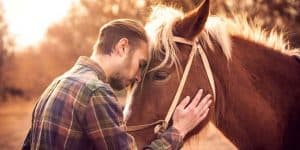
One important lesson which can be learnt from horses, is how to identify and cope with feelings. People who are going through various emotional and mental issues, have come to understand that feelings are painful. Equine therapy is an important tool which can be used to connect with thoughts and feelings. Horses have this special ability to detect different emotions and respond accordingly. So, observing these responses from the horses helps to promote self-awareness and aid people to view themselves in a more sensitive and practical way.

Also, another lesson which cannot be skipped, is enhanced communication skills. People who are down with mental health issues, find it hard to relate emotionally. Getting close to people and establishing relationships could be a herculean task for them. Horses cannot speak, however they know how to communicate really well. Getting to understand a horse’s behavior helps people to understand how to interact with people with regards and full consciousness.

Conclusively, interactions with a horse would teach you how to set boundaries. A working relationship with a horse discloses the faulty or inadequate adaption to a new situation and also the behavioral patterns of a person. Horses are always quick to point out if they are uncomfortable with people who have crossed their boundaries. People who often try to control or dominate a horse have found it difficult to do so. In the same way, keeping a reasonable distance from a horse makes it hard for the horse to cooperate willingly without putting up opposition.

Equine therapy presents a whole new way for people who are faced with challenges to view themselves and the world in general, in a different light. Equine therapy has helped people to achieve momentous advancements in their treatment goals.

HORSES AND PEOPLE: MENTAL HEALTH WELLNESS

MAN AND ANIMALS: A NATURAL RELATIONSHIP

Man’s endearment to animals has started a long time ago. Most of the animals which man are friends with are however not the wild types. Although, a number of them could have tendencies to be wild and even harmful to man. On a general scale, they can still be domesticated. Animals in this category are used for majorly two purposes, they are either used as pets or as farm animals. Wild and domestic animals alike, have been an important aspect of man’s culture, as they are in many ways very important to man’s survival. Animals serve as wonderful companions, colleagues and even as supporters in some cases.

Animals have been known to provide people with physical and mental therapy, in some cases, animals could also help the elderly to walk capably. Not all countries show the same level of care and attention to animals, developed countries in this sense have embraced this, while other countries are still coming to terms with it. The relationship between animals and man can be said to be communal and advantageous.

BENEFITS OF HAVING HORSES COMPANIONS

One of such animals which provide a beneficial relationship with man, are horses. Horses are known to be excellent providers of recreation which have health gains. Horseback riding is a great form of exercise which makes use of quite a number of muscles in the body. Strength is needed to hold the reins firmly thereby ensuring a firm positioning on the saddle. Horseback riding helps one to develop coordination and balance. Even when it comes to mounting off and on the horse, flexibility is exercised.

For mental health wellness, interactions with horses is a nice way to get in touch with human emotions. Horses are highly sensitive, and they react to all kinds of emotions which are shown towards them. For example, if hostility is shown to horses, they sense it real fast and they react accordingly. So, horses’ reactions can be interpreted in understanding your own emotions.

Also, horses have great communication skills. They express their feelings non-verbally and it would be very easy for you to know if a horse is taken to you or not. A mentally ill individual needs improving communication skills. A mentally ill individual drives people into isolation, thereby dampening their ability to communicate well.

Furthermore, when it comes to building trust and overcoming fears which are essential to recovering from mental health issues, horses are instrumental in ensuring this. Being around a horse helps you to re-learn and build trust, and this develops as your riding skills improves. Having a horse around has a stock of benefits for emotional and mental health.

HORSEBACK RIDING: A SURE WAY OF ENSURING SOUND HEALTH

HEALTH: A QUINTESSENTIAL HUMAN FACTOR

Our health is of utmost importance, and the manner with which we take care of ourselves goes a long way in determining how well we would be able to carry out our conventional daily activities. Once the health of an individual is on a low-ebb, productivity is on the decline, and the faster the person recovers, the better.

Ensuring that our health is a foremost priority is very important, and there are various ways by which we can take care of ourselves without having to visit the hospital frequently.

Ill-health stems from accrued stress, and it is a mainstream fact that when stress is much in the human body, uncomfortable and unpleasant situations are bound to happen in the body. One effective way of handling stress in order to have a sound health, is by relaxing with animals. Using a horse for example, it is quite amazing that people do not know the benefits inherent in horseback riding.

BENEFITS OF HORSEBACK RIDING

Before cars and other means of transportation were invented, horses were used as one of the major means of transportation. These days, horses are majorly used for recreational purposes. Despite this change, horses still serve well as a good form of recreation. Asides the fact that there are many health benefits, horses are even employed in the therapy for children who are mentally disabled.

One of such benefits is coordination, horseback riding ensures that the movements which happen while riding are properly guided, this is the major benefit of coordination. Also, it ensures muscle tone and flexibility. With the thighs (inner), pelvic muscles and the core muscles, the rider is able to achieve a squatting position which eventually becomes balanced in the long run, this helps to adjust to the rhythm of the horse’s movement.

Horseback riding also helps in mental exercise. While riding, there are some things you learn about yourself, this could also be termed as induced meditation. On the horse, there is only one focus which is, riding on the horse and remaining balanced in order to prevent falling off. With this, the mind is sharpened, and it thinks quickly and faster than usual. The horse is an animal with a mind which is self-controlled. If the horse is controlled well against its will, you would have taken a step further in achieving control and coordination.

In cases where you are not riding, the act of cleaning up the stables and taking care of the horse, ensures stable strength by strengthening the muscles. In essence, horseback riding presents lots of benefits on and off the track.